

Organization of the Society of St. Pius X
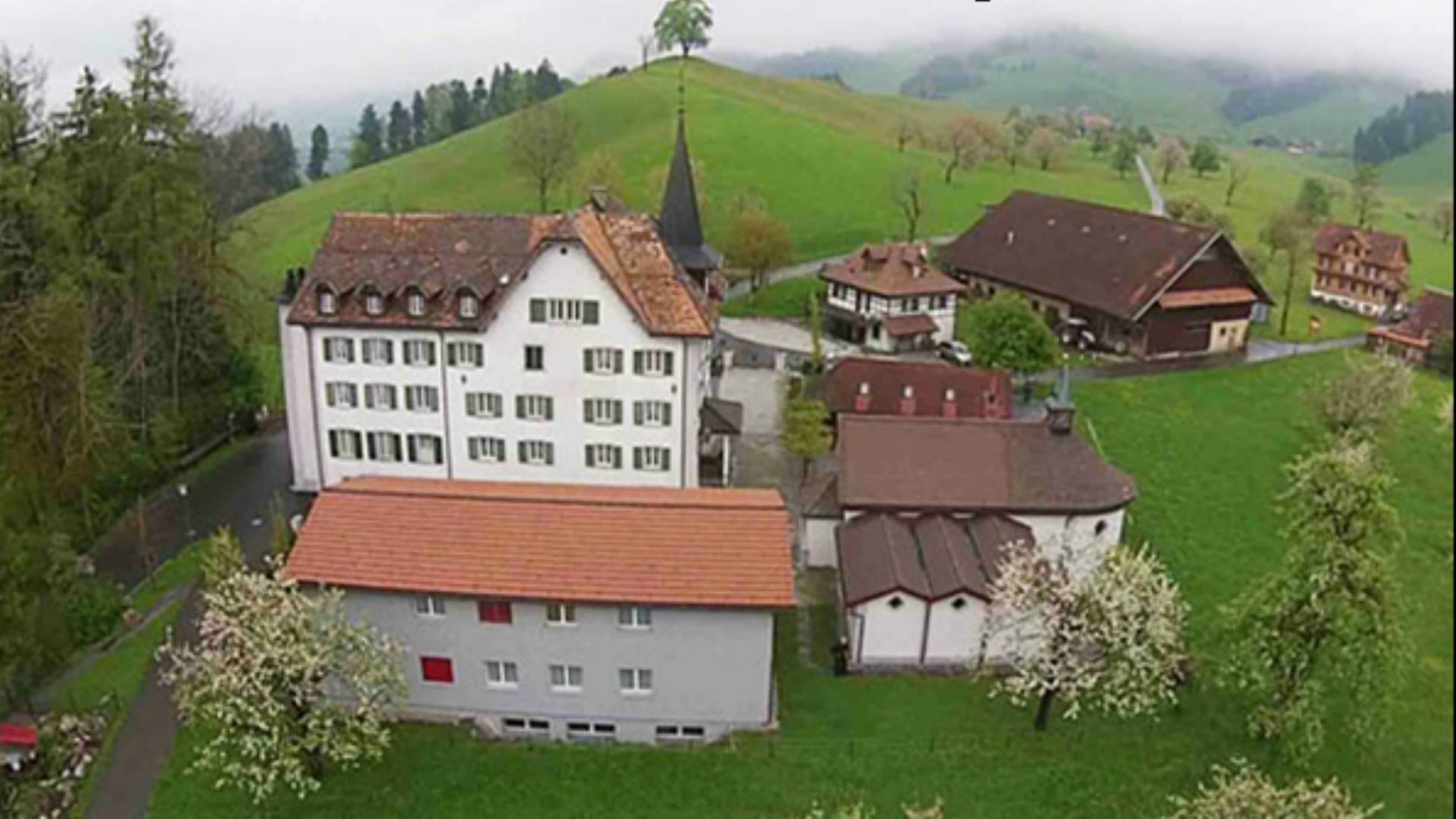
Erected first in 1979 at Rickenbach (Swiss canton of Solothurn), the General House has settled in Menzingen (Swiss canton of Zug) since 1993.
It is the residence of the Superior General, his two Assistants, the Secretary General and Bursar. It groups together the secretariat and the treasury so as to unite and facilitate exchanges and the management of the goods belonging to the Society.
Every religious order, congregation, and society of common life in the Church is governed by an elected superior general. Assisted by a General Council, he guides the members and the apostolic works of the institute, according to the norms and spirit of the Constitutions.
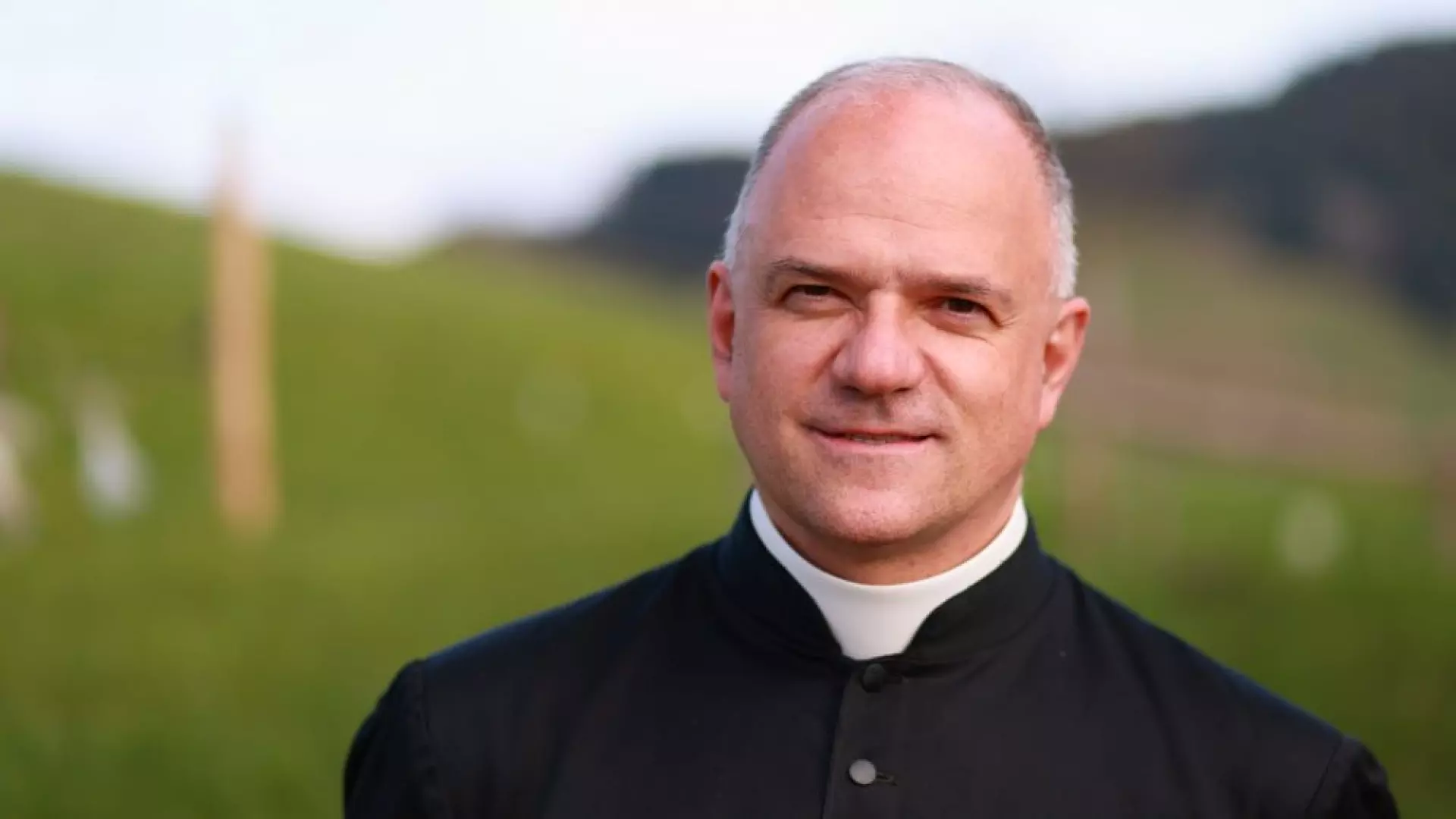
Superior general Father Davide Pagliarani
The Constitutions or Statutes of the Society of St. Pius X, the founding document written by Archbishop Lefebvre and approved on November 1, 1970 by Bishop Francois Charriere, of Lausanne, Geneva, and Fribourg, determine that the Superior General is elected by the General Chapter for a term of office of 12 years, and that he may be re-elected. A two-thirds majority of votes is required. To be eligible, he must be a priest having made his perpetual engagement in the Society, and be at least 30 years old.
His function
The Statutes of the Society define succinctly the function of the Superior General as the one who “governs and administers the Society.”
To this effect, he resides at the General House in Menzingen, Switzerland, where he oversees the day-to-day apostolic and administrative activities of the Society, holding meetings with his Council, receiving visits of priests and faithful, and attending to his abundant correspondence.
The Superior General maintains a close contact with the different superiors responsible for the work of the Society worldwide. He visits regularly all the seminaries and priories of the Society, meeting in person with every member and becoming acquainted directly with the development and needs of the different apostolates.
His international trips allow him to preach every year spiritual retreats to priests, seminarians, and religious, and also to encourage the work of Tradition by giving conferences to the faithful. These journeys offer him as well the opportunity to visit friendly religious communities and local priests who are interested in the Society.
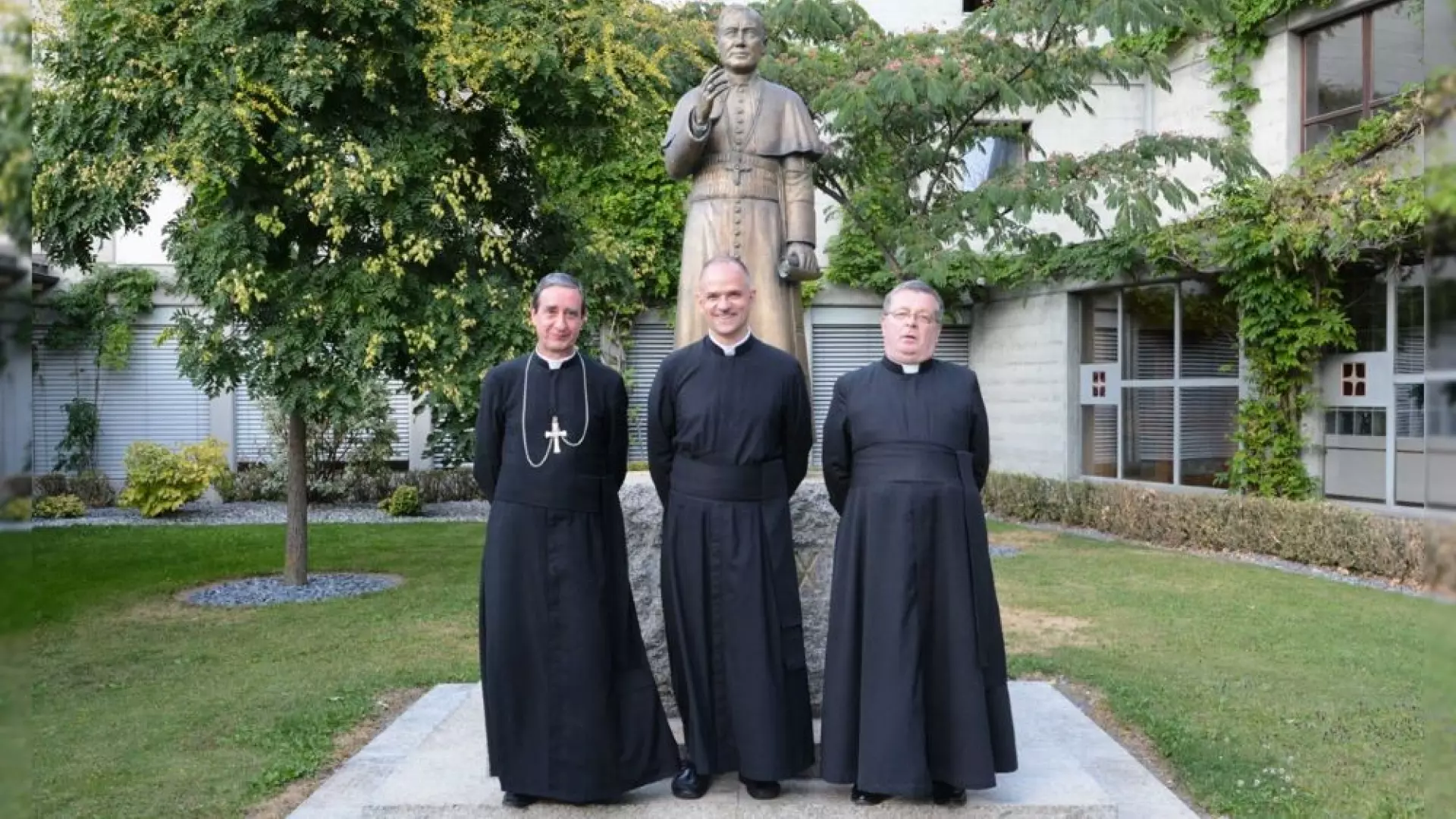
The General Council of the Society of St. Pius X is composed by the Superior General and his two Assistants.
The First Assistant: Mgr Alphonso de Galarreta; The Second Assistant: Fr. Christian Bouchacourt
The Assistants are elected by the members of the General Chapter for a term of office of 12 years. They must be priests, permanently engaged in the Society, and be at least 30 years old. They are elected by an absolute majority of votes.
Their function
In their capacity of official advisers of the Superior General, they share with him and under his authority the government of the Society worldwide.
The First Assistant acts as well as Vicar General, replacing the Superior General if he is incapable of fulfilling his office, or if the office itself becomes vacant.
Residing at the General House in Menzingen, Switzerland, the two Assistants must travel extensively and frequently to the four corners of the world, in such manner that each seminary and district is visited at least once a year. With their familiar presence in the communities they foster the unity among the members, and by the means of personal meetings, retreats and conferences they encourage them to maintain a burning zeal in the service of the Church and the souls.
Once a month the General Council meets for three consecutive days. The Assistants must be consulted in all important matters and they have a deliberative voice in the major decisions regarding the life of the Society (new foundations, nominations of superiors, building projects, etc.).
The First Assistant
Mgr Alphonso de Galarreta
The Second Assistant
Fr. Christian Bouchacourt
Secretary General
"The Secretary General takes sees to the preparation and the reports of the meetings of the General Council. He conforms the concerned parties of the decisions taken (...).
"He is responsible for keeping the records and the individual files of the members. (…) He makes sure that the ordination records are kept up to date.” (Statutes)
Fr. Foucauld le Roux was ordained in 2015. After 3 years of ministry in France and 2 years as a professor at the seminary of Ecône. He was appointed in 2020 to the General House as Secretary General. He is assisted in its work by a priest secretary.
Bursar General
The General Bursar oversees the legal state of affairs and the good management of the property of the Society of St. Pius X worldwide.
Fr. Emeric Baudot was ordained in 1988; he was appointed in different places, and already General Bursar of the Society in 2002 until 2014; and after 5 years in France he has been reappointed General Bursar.
Other assistants
The General House also houses the Superior General's private secretary and director of communications.
A large community of oblate sisters of the Society ensures the atmosphere of religious life, conducts the housekeeping, and assists with secretarial work.
The function of the General Chapter of the Society is to elect every 12 years the Superior General and his two Assistants. Representing the entire institute, it is also entrusted with the charge of ensuring that the Society remains faithful to its Statutes and spirit; this is why any necessary update or modification of the constitutions must be ratified for its validity by the General Chapter.
In consideration of the Society’s development and the needs of the apostolate, it has become customary for the Superior General to convoke every six years a “chapter of affairs,” in order to treat the questions of major interest and to determine and approve norms for the entire institute.
Composed by the members of the General Chapter, who may be assisted by a small number of priests with expertise in the matters to be treated, the chapter of affairs is structured in commissions (seminaries, schools, apostolate, administration, liturgy, sanctification of the members, etc.) where the different subjects are discussed in depth. All the members of the Society are encouraged to send their suggestions and wishes, and particular attention is given to the study of each one of them. The work of the commissions is presented every day to the deliberation and eventual approval of the general assembly. The acts with the conclusions and decisions of the chapter of affairs are published and distributed to the members of the Society.
The Superior General may convoke as well for exceptional reasons an extraordinary meeting of the members of the General Chapter.
Its members
The General Chapter is comprised of the superior general, his two assistants, the bishops of the Society, the previous superior generals, the secretary general and general bursar, the seminary rectors, superiors of districts and autonomous houses, and a number of senior priests in the proportion of one third of the members ex officio.
On June 30, 1988 Archbishop Marcel Lefebvre, founder of the Society of St. Pius X, and Bishop Antonio de Castro Mayer, bishop emeritus of Campos, Brazil, consecrated four bishops at the seminary of Econe, Switzerland, in the presence of 10,000 faithful and hundreds of priests and religious.
The four new bishops, Bernard Tissier de Mallerais (born 1945, France), Richard Williamson (born 1940, England), Alfonso de Galarreta (born 1957, Spain), and Bernard Fellay (born 1958, Switzerland), were chosen by Archbishop Lefebvre among the members of the Society of St. Pius X because “they seemed to us the most apt, whilst being in circumstances and in functions which permit them more easily to fulfill their episcopal ministry, to confirm your children, and to be able to confer ordinations in our various seminaries,” as he explained in the sermon of the ceremony of consecrations.
Neither schismatic nor excommunicated
In the same sermon, Archbishop Lefebvre emphasized the extraordinary circumstances justifying his grave decision:
It is not for me to know when Tradition will regain its rights in Rome, but I think it is my duty to provide the means of doing that which I shall call “Operation Survival,” operation survival for Tradition. Today, this day, is “Operation Survival.
If I had made this deal with Rome, by continuing with the agreements we had signed, and by putting them into practice, it would have been “Operation Suicide.” There is no choice, we must survive. That is why today, by consecrating these bishops, I am convinced that I am keeping alive Tradition, that is to say, the Catholic Church.”
One year after the consecrations, in an interview published in the July-August 1989 issue of the SSPX’s magazine in France, Fideliter, the archbishop maintained that
we should have no hesitation or scruples with regard to these episcopal consecrations. We are neither schismatic nor excommunicated, and we are not against the pope. We are not against the Catholic Church. We are not creating a parallel Church. All that is absurd. We are what we have always been — Catholics carrying on. That is all.”
The role of our bishops
Their ministerial function being limited to the administration of the sacraments of holy orders and confirmation, our bishops neither received nor claimed any episcopal jurisdiction over priests or faithful.
In his 1989 interview by Fideliter, Archbishop Lefebvre stated that
the four bishops are there to give ordinations and confirmations, to replace me and to do what I did for several years. For the rest, it is clearly the district superiors who are given a territory which is theirs and who, as far as they can, go to the help of the souls calling for them. For these souls have the right to have the sacraments and the Truth, the right to be saved. And, so we go to help them, and it is the request of these souls which grants us the right, as foreseen by Canon Law, to minister to them.”
In his letter to the four candidates, August 29, 1987, Archbishop Lefebvre had already explained that
the main purpose of my passing on the episcopacy is that the grace of priestly orders be continued, for the true Sacrifice of the Mass to be continued, and that the grace of the sacrament of confirmation be bestowed upon children and upon the faithful who will ask you for it.”
Archbishop Lefebvre insisted on their attachment to the Holy See and on their service to his priestly Society:
I beseech you to remain attached to the See of Peter, to the Roman Church, Mother and Mistress of all Churches, keeping in its entirety the Catholic Faith as expressed in the various creeds of the Faith, in the Catechism of the Council of Trent, in conformity with what you were taught in your seminary. Remain faithful in the handing down of this Faith so that the Kingdom of Our Lord may come.
Finally, I beseech you to remain attached to the Priestly Society of St. Pius X, to remain profoundly united amongst yourselves, in submission to the Society's Superior General, in the Catholic Faith of all time, remembering the words of St. Paul to the Galatians (1:8-9): 'But even if we or an angel from heaven were to teach you a different gospel from the one we have taught you, let him be anathema.'
The Roman reaction to the consecrations
On July 1, 1988, Cardinal Bernardin Gantin, Prefect of the Congregation for Bishops, signed a decree of excommunication announcing that Archbishop Lefebvre, Bishop de Castro Mayer, and the four new bishops had performed a schismatic act and excommunicated themselves latae sententiae (automatically) in accordance with the provisions of canon 1382 of the Code of Canon Law:
A bishop who consecrates someone a bishop without a pontifical mandate and the person who receives the consecration from him incur a latae sententiae excommunication reserved to the Apostolic See.”
The following day, July 2, 1988, Pope John Paul II issued the apostolic letter motu proprio, Ecclesia Dei adflicta, confirming the excommunications and the existence of a schism.
The Society of St. Pius X has always contested the juridical validity of the censure. Besides other considerations, the excommunication was not incurred because a person who violates a law out of necessity is not subject to a penalty (canon 1323 §4), and even if there is no state of necessity, when one inculpably thought the opposite he would not incur the penalty (canon 1323 §7); and if one culpably thought there was such a state of necessity, he would still incur no automatic penalties (canon 1324 §3).
Accusation of schism
As for the accusation of schism, Archbishop Lefebvre always recognized the pope’s authority. Consecrating a bishop without pontifical mandate would be a schismatic act if one pretended to confer not just the fullness of the priesthood but also jurisdiction, a governing power over a particular flock. Only the pope, who has universal jurisdiction over the whole Church, can appoint a pastor to a flock and empower him to govern it. But Archbishop Lefebvre never presumed to confer anything but the full priestly powers of holy orders.
Cardinal Rosalio Castillo Lara, President of the Pontifical Commission for the Authentic Interpretation of Canon Law, in La Repubblica, October 7, 1988, stated that the consecrations performed by Archbishop Lefebvre and Bishop de Castro Mayer did not constitute an act of schism (“The mere fact of consecrating a bishop is not in itself a schismatic act”).
The Dean of the Faculty of Canon Law of the Catholic Institute of Paris, Fr. Patrick Valdrini, confirmed that “it is not the consecration of a bishop that creates a schism; what consummates the schism is to confer upon that bishop an apostolic mission” (Valeurs Actuelles, July 4, 1988).
And Cardinal Dario Castrillon Hoyos, President of the Pontifical Commission Ecclesia Dei, has declared, on at least five separate occasions in public interviews (30 Giorni n. 9, 2005), that the Society of St. Pius X is not in a situation of formal schism. He has also affirmed that “the bishops, priests, and faithful of the Society of St. Pius X are not schismatics.” (Die Tagespost, February 8, 2007)
Finally, on January 21, 2009, a decree of the Congregation for Bishops, signed by its Prefect, Cardinal Giovanni Battista Re, based on the faculties expressly granted by Pope Benedict XVI, declared the decree of July 1, 1988, to be deprived of any juridical effect.
The Priestly Society of Saint Pius X is a fraternity of priests whose spirituality is centered on the Holy Sacrifice of the Mass and the priesthood, The SSPX associates to itself all those souls of good will who wish to lead a serious and authentic religious life, or who simply want to participate in the graces of the Society.
Although the Society is essentially made up of priests, its Founder also wanted it to welcome religious members, the auxiliary Brothers, who are placed directly under the authority of the Superior General: they observe the same statutes as the priests, to which some particular rules are added.
Archbishop Lefebvre, with the help of his sister, Mother Marie-Gabriel, missionary of the Holy Ghost, also founded the Congregation of the Sisters of the Society of Saint Pius X. According to the desire of their Founder, these religious are placed under the authority of their Mother General, but they work in close union with the Priestly Society, whose spirit and ideal they fully share.
The Society also welcomes Oblate Sisters. These are either nuns who wish to protect their religious life and have had to leave a congregation unfaithful to its constitutions; or simply persons wishing to leave secular life in order to live in the spirit of the Society. Like the Brothers, they depend directly on the authority of the Superior General, but they have their own statutes.
Finally, for those who wish to live in the spiritual atmosphere of the Society while remaining in the world, a “Third Order” has been founded. The Third Order helps these persons to lead a Christian life for their personal sanctification and for the spiritual edification of those around them.
Other religious congregations
Other male and female religious congregations, faithful to Tradition, also find moral and spiritual support from the Society. The priests of the Society provide chaplains to many of these orders.
Founded in 1974 when the first Sister received the religious habit, the Congregation of Sisters of the Society of Saint Pius X was established to facilitate the apostolate of the priests of the Society of Saint Pius X. The founders, Archbishop Marcel Lefebvre and Mother Marie-Gabriel Lefebvre, his sister, were both missionaries in the Congregation of the Holy Ghost.
Seeing that the crisis of faith since the Second Vatican Council was an ever-increasing danger for souls, the Archbishop, following the signs of Providence, founded the Priestly Society and then the Society of Sisters which he confided to his sister, Mother Marie-Gabriel.
The soul of the Sisters’ apostolate is found at the foot of the altar, with daily assistance at the Holy Sacrifice of the Mass which is the source of the Sisters’ strength in their complete gift of self, and with an hour of adoration before the Blessed Sacrament, where the Sisters intercede for priests and the Church’s hierarchy. Following Our Lady of Compassion their principal patron, they offer themselves in union with the Divine Victim for the salvation of souls, especially those of priests.
A Life Centered on the Holy Mass
The Sisters’ spiritual life is centered on the Holy Mass, but is also nourished by the Liturgical Hours of Prime, Sext and Compline (on Sundays and feast days: Lauds, Sext, Vespers and Compline), meditation, spiritual reading and the rosary. Among their varied activities, it is only natural that the Sisters devote themselves to all that is related to the altar; for example, the embellishment of liturgical offices and places of worship through the study of Gregorian chant, floral arrangements, the sewing and care of church vestments and altar linens.
After a formation of two and a half years in one of the four novitiates of the congregation, the novice is consecrated to God by the three vows of poverty, chastity and obedience. The newly professed Sister is then assigned to one of the 30 houses of the congregation. It is in the common life that she will find an inestimable help in her joys and trials.
The Interior Life is Source of the Apostolate
The active works of the Sisters’ apostolate flow from their interior life of union with Our Lord. Their activities facilitate and complete the apostolate of the Priestly Society of Saint Pius X in priories, missions, schools, retreat houses, retirement and nursing homes or seminaries.
In addition to household tasks, the Sisters undertake a variety of works: teaching in schools (all subjects in elementary schools, home-economics classes in secondary schools); offering catechism classes in schools and parishes; running camps, summer activities and sodalities such as the Children of Mary for girls and young women; directing parish choirs and women’s groups, etc. The motherhouse is the headquarters for the Our Lady of Fatima Correspondence Catechism in the French language, as well as for the Eucharistic Crusade in France. In the United States of America, Our Lady of Fatima Correspondence Catechism is based in the Sacred Heart Novitiate in Browerville, Minnesota.
Statistics
In June 2024, the Congregation of the Sisters of the Society of St Pius X had 211 professed Sisters (of 21 different nationalities) in 10 countries: France, Belgium, Switzerland, Germany, Italy, the United States of America, Argentina, Gabon, the Dominican Republic and Australia.
The founder
Founded by Archbishop Lefebvre, the family of the SSPX’s oblate sisters saw the light of day in 1973.
Obliged in conscience to leave her religious family, which had become unfaithful, an initial French nursing sister, Sister Marie Bernard, came knocking at the door in Econe.
Others did not delay in doing the same, and so the SSPX’s oblate sisters was born.
Therefore originally the oblate sisters were women religious who had been released canonically from the obligations to their own congregation and wished to save their vocation from the post-conciliar debacle.
Soon enough they were joined by mature individuals who were free from the duties of their state in life and desired to sanctify themselves as affiliates of the Society while devoting themselves to its works. Presently, since the crisis in the Church persists and is the source of new needs, recruitment tends to be modified, and a more flexible structure allows other vocations to find good soil that will help them to flourish.
Hierarchical ties
The oblate sisters have no hierarchy of their own, unlike most women’s congregations, among them the SSPX Sisters who, despite their name and the profound spiritual ties that they maintain with the Society, are juridically independent of it.
As full-fledged members of the Society, like the priests and the brothers, the oblate sisters have no elected superior general but depend on the SSPX’s Superior General. When they make their oblation they commend themselves into his hands, remaining entirely at his disposal for the needs of the Society.
In the priories, the sisters depend directly on the prior.
If the community has more than three members, a superior may be designated by the Superior General, after consultation with the prior.
Religious or oblate?
According to the definition within the Statutes — composed by Archbishop Lefebvre in 1982 — the oblate sisters form “a society of common life without vows but with a commitment, like the society of priests of the Society of St. Pius X.”
Church history shows a certain development from the general, traditional concept of monasticism (with stability and solemn vows) to more recent forms of “states of perfection”.
Indeed, over the centuries, without abandoning anything of the monastic tradition, which keeps its privileged place, new families have been created, according to increasingly flexible formulas. While detaching themselves from external forms — which are very important, of course, but not indispensable — they have kept only the essential element of a life entirely given over to God and accepted and approved by the Church.
So it is that alongside “the complete canonical state of perfection” — the perfect model of the states of perfection — to which orders with solemn vows and congregations with simple vows belong, the Code of Canon Law defines societies of common life without vows as a “second canonical state of perfection”. Although they do not have several juridical elements necessary to constitute the complete canonical state of perfection, such as public vows of poverty, chastity and obedience, these societies nevertheless have the other substantial qualities of the life of perfection.
Thus, according to the law of the Church, although these societies are not religious institutes in the proper sense and their members are not religious, the Code recognizes that they are similar to them.
That is how Archbishop Lefebvre wanted the SSPX’s oblate sisters to be.
The spirituality of the oblate sisters
The spirituality of the oblate sisters is that of the Society, which is the same as the spirituality of the Church: the heart of it is the Sacrifice of the Cross renewed each day on our altars by the Holy Sacrifice of the Mass.
Thus Holy Mass is the inexhaustible source of the spiritual and religious life (Statutes).
Divine Office — Prime, Sext and Compline — meditation, rosary recited in common, spiritual reading, time for personal prayer: the whole day is immersed in the Blood of the Lamb, since the sisters are riveted by their oblation to the foot of the Cross:
“They are happy to participate in Our Lord’s Sacrifice, like Our Lady of Compassion, standing at the foot of the Cross.” (Statutes)
To contemplate Jesus Crucified with the eyes and the heart of Mary is, in truth, the vocation of an oblate.
“She will add in particular, as an intention of her spiritual life, compassion for the sufferings of Jesus on the Cross, after the example of Our Lady of Compassion, their Patroness, for the redemption of souls, for the sanctity of priests, and for her own sanctification.” (Statutes)
“For priests”: as members of a Society whose purpose is the priesthood and everything related to it, they must sanctify themselves above all for the sake of priests.
In speaking to the oblate sisters in Econe on the Feast of Our Lady of Compassion — April 10, 1981 — Archbishop Lefebvre told them:
“...So you, dear Sisters, auxiliaries of the priest, helpers not only with your hands but helpers also with your souls and mind of the priesthood, of the Sacrifice of Our Lord Jesus Christ, of His Cross, of the extension of His Reign, of the extension of His Love, you will unite yourselves in a very special way to the Most Blessed Virgin Mary.
“Like her at the side of her Divine Son, you will be compassionate and thus you too will contribute in a very effective way to the redemption of souls, to the extent to which you can do so, in the measure in which Providence gives you the graces to do so.
“Thus you will be associated in a deeper way with the priesthood of the priests, asking that these priests and these seminarians whom you serve might become true priests, that they might truly become other Christs, that they too might be associated in an ever deeper, ever more perfect way in the Passion of Our Lord Jesus Christ....
“You will ask this of the Most Blessed Virgin Mary. And so, offer your sufferings, offer your sacrifices for this intention, so that the reign of Our Lord Jesus Christ might be extended.”
In this hour of torment for the Church and for the priesthood, there is another specific intention that Archbishop Lefebvre wished to add:
“More than ever there are sacrilegious abandonments, sorrowful abandonments of Our Lord, particularly by souls who are consecrated to God. This is why we urge you to offer your little trials, sacrifices and difficulties, all the pains that the Good Lord may allow you to suffer and that you have, in union with the sorrows of the Most Blessed Virgin Mary in reparation for all these sacrileges.” (Sermon, April 6, 1979)
Qualifications
Since the secondary purpose of the SSPX’s oblate sisters is dedication to the works of the Society, in other words, assisting priests, whether in the seminaries, the priories or the schools, the required qualifications are as follows:
a balanced personality,
a minimum of judgment and common sense,
a will strong enough to persevere in spite of difficulties,
adult maturity, since the oblate must be able to confront all sorts of situations,
normal emotional development and equilibrium, which is all the more necessary for an oblate inasmuch as she is called to a life of service and therefore to be in contact with priests,
the character traits and sociability necessary for common life.
The presence of these required qualifications is not necessarily a sign of a vocation: not everyone who possesses them is called to religious life; on the other hand, someone who does not have these qualifications is certainly not called.
As with all religious life, the most important thing needed to become an oblate is a call from God, in other words, a vocation.
Is any special preparation or study required? Is there a minimum age?
No special preparation is required to enter the oblates, except a Christian life that is already well rooted in Tradition.
According to the Statutes, admission can be requested by “persons whose age does not allow them to enter the sisters of the Society,” which means from the age of 30 on. But there are cases when exceptions are made to this rule when other impediments besides age do not permit candidates to be accepted by the SSPX’s sisters.
No age limit is set, as long as the aspirants are still capable of adapting to common life and of serving the Society.
Good health
It is merely necessary to have sufficient strength to be able to dedicate oneself and to render service, according to one’s own abilities, wherever obedience may place the sisters.
Postulancy and novitiate
The Statutes provide for one year of postulancy and one year of novitiate.
Since 1999 the novitiate of the oblate sisters has been established in Salvan, Switzerland, not far from the seminary in Econe.
The year of postulancy ends with taking the habit, marking entry into the novitiate, which is a time of formation.
In the silence and recollection of a more withdrawn life, postulants and novices prepare to become helpers of the priest, by the work of their hands and the prayer of their souls.
Not yet involved in the turmoil of the active life, they lay the foundations of their future life and are initiated into the secrets of the interior life, “the reason for being of persons who are consecrated to God” (Statutes). They learn that this life of union with God must be all the more profound, since it will be less protected later on, and they make their own the words that St. Vincent de Paul addressed to his Daughters (while adapting them to their own state):
“... Because they will be more exposed to the outside world and to occasions of sin than nuns who are obliged to live in cloister, having as their monastery only their house [or the school of the priory]..., as their cloister — obedience, as their grille — the fear of God, they must have as much virtue or more than if they were professed in a religious order, and they are obliged to conduct themselves wherever they may find themselves among people with as much recollection, purity of heart and body, detachment from creatures and edification as real nuns in the seclusion proper to their monastery.”
In the morning and afternoon, according to the levels of their education, courses are given to the sisters. This instruction in Catholic doctrine and Church history complements their apprenticeship in religious life and the practice of virtues. The discovery of the liturgy in integrated with the rhythm of the liturgical year, and the proximity of Econe allows them to experience the splendors of the ceremonies on feast days. Spiritual reading, combined with the daily reading of Sacred Scripture, is another part of the daily schedule, to nourish the soul and to strengthen the mind. A time of personal study then allows each novice to assimilate all these riches and to study them in greater depth.
Besides their spiritual formation, the sisters are also initiated into their household tasks and acquire practical knowledge of cooking, sewing, laundering, and the sacristan’s work, in a word, everything that makes up the life of a priory.
Add to that a half hour of singing each day, two intervals of recreation in fraternal joy, one excursion every month (or so) in the beautiful Swiss mountains, and you will have almost a complete idea of the life of the novitiate under the patronage of St. Therese of the Child Jesus.
Commitments
At the conclusion of this preparation, the novice commits herself, not by public vows, but by an act in which she makes her oblation or offering to God with the Divine Victim and promises to observe the Statutes, specifically what they prescribe concerning the virtues of obedience, poverty and chastity.
After six years of an annual commitment, the oblates may ask to renew it for three years, and after nine years, they can ask to make a definitive commitment.
The renewal of their commitment is made on the Feast of Our Lady of Seven Sorrows, September 15.
Typical day of an oblate
Here is the daily routine, as prescribed in the Statutes:
- 6:00 a.m. Rise
- 6:30 a.m. Common prayer (Prime or Lauds) followed by meditation
- 7:15 a.m. Holy Mass
- 8:00 a.m. Breakfast, free time
- 9:00 a.m. Work
- 12:00 noon End of work
- 12:15 p.m. Sext
- 12:30 p.m. Lunch, recreation
- Free time, spiritual reading
- 3:00 p.m. Work
- 4:15 p.m. Snack
- 4:30 p.m. Work
- 6:00 p.m. Free time
- Rosary or Benediction of the Blessed Sacrament
- 7:30 p.m. Dinner
- 8:45 p.m. Compline, grand silence
What is the Third Order of Saint Pius X?
The Third Order is the fifth family of the Society of Saint Pius X. The first family is the priests and seminarians, the second is the Sisters of the Society of Saint Pius X, the third is the brothers, the fourth is the Oblate Sisters.
What is the purpose of the Third Order?
The Third Order of Saint Pius X is an “Order set up to secure for souls living in the world a school of sanctity.“ The purpose of the Third Order is therefore the sanctification of its members and their dependants.
Like the old traditional Third Orders (Carmelite, Dominican, Franciscan...), the Third Order of the Society of Saint Pius X is a state of life midway between the cloister and the world, or to put it in different words, a religious Order which will penetrate into Christian homes in the midst of the world.
What is the spirit of the Third Order?
It is centred on the devotion to the Holy Sacrifice of the Mass, which is nothing else than the Sacrifice of the Cross renewed on the altar in an unbloody manner. The members of the Third Order unite themselves to Our Lord, the Divine Victim, offering Himself up out of love for His Father and for souls. In this they find the strength that they need on the difficult path to holiness. Devotion to Our Lady of Sorrows, to Saint Joseph, and to Saint Pius X are also present in the soul of the member of the Third Order.
What are the main obligations for a member of the Third Order?
These are contained in the Rule of the Third Order. In brief: morning and evening prayer, daily rosary, confession once a month, fifteen minutes of mental prayer every day (or daily Mass where it is possible) and a retreat every two years. Also, habitual abstinence from television.
How can I become a member of the Third Order?
Please contact the chaplain of the Third Order
Complete and submit an application form for membership.